
Chance the Comeback Kid
Essay: Just you believe in you

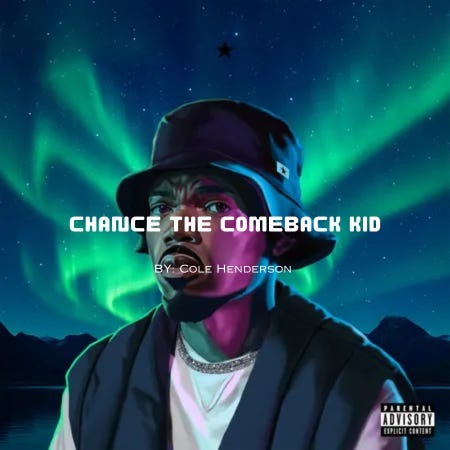
I was taught I should speak to the dwellers of a space once I’ve entered a room. A greeting, a salutation, an announcement of my presence that marks the pleasure of meeting beloveds known or not yet known. A piece of advice, one should never enter a place unannounced, unless one is trying to be sneaky, and being sneaky means there’s some funny business going around. Acknowledging others is good for the soul, even if it is just a head nod from my introverted brothers and sisters. I don’t have to tell you how important first impressions are, but I am a believer in starting over if they don’t go the way you desire. When Chance the Rapper enters a room, I can only imagine, for the most part, that it is with the utmost exuberance. In fact, that is the manner in which he has started every music project since his debut mixtape, 10 Day, stimming his signature “IGH” adlib, which, depending on the day, we all love. Once you hear it, it can’t be unheard, and the best part about it is that absolutely no one else can replicate it. I have listened to friends try to mimic the adlib, but to no avail. My heart goes out to the many young fans who have shown their appreciation for Chance by rattling off the many “IGH’s” he has planted in his songs, only for the elders to look upon the youth in astonishment. I can hear the elders mumble, That boy crazy, in only a way Black elders can, with contempt and a dash of love. Ultimately, yes, Chance is our cousin with ADHD who was mislabeled as the troubled kid.
“I was in Special Ed from 4th grade through graduating high school,” Chance tells Angela Yee during an interview, “I had an IEP (Individualized Education Plan)… and those sorts of diagnoses and labels on children definitely mess with their sense of self and confidence.”
I am glad Chance refused to let an evaluation from the 4th grade interfere with his comeuppance, because all of Chance’s warmest, fullest, and most honest tracks are the first ones from each project. “Hey, this ain’t no intro, this the entree,” he raps on “Good Ass Intro” from his Grammy Award-winning mixtape Coloring Book. And it’s true. He serves all his Track 1s with an extra serving from each dish. Once all of the grandkids reached a certain age, my Grandma would tell us, Help yourselves, referring to the delectables that were already prepared on the stovetop. Help yourself, a referral in its own right, but straight from the specialist herself. Black folks, we are not in the business of diagnosis; we simply love to a fault, until something cracks, then keep loving. The cracking rarely occurs over the body’s largest organ; rather, it happens mentally and often socially. I have witnessed a layer of freedom reveal itself after a friend was diagnosed with ADHD at their adult age, and I see that life does not get easier, but now there is context. What we’ve known for a long time, especially among my fellow millennials and throughout each generation moving forward, is that a diagnosis should not define you.
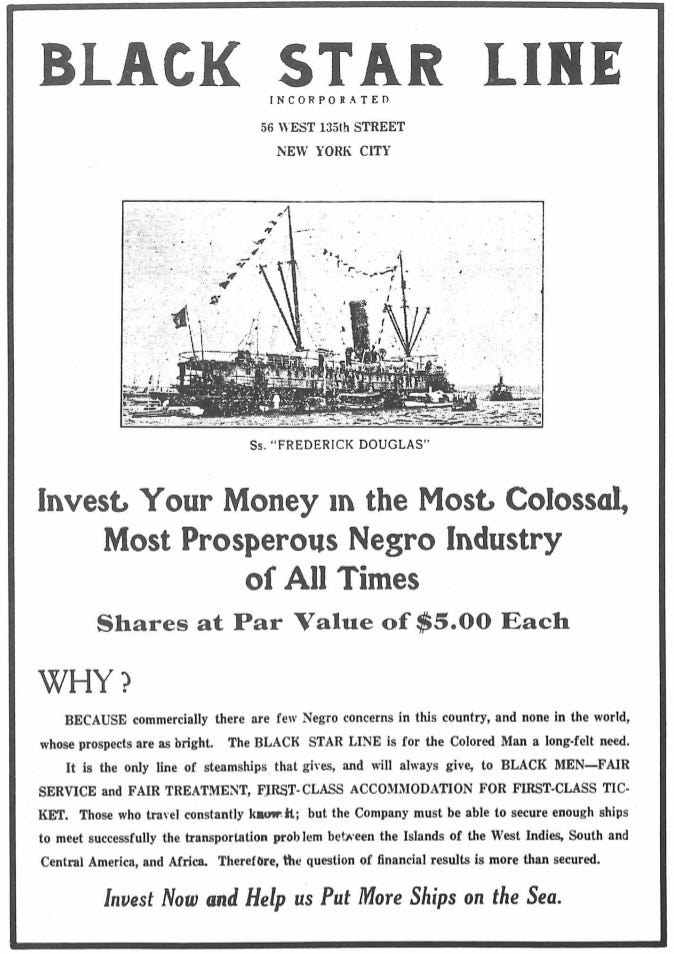
Maintaining confidence is difficult after any sort of diagnosis, which is why Chance the Rapper’s second album, STAR LINE, is soaked in glorious victory. The album acts as a sonic pathway to freedom for those who would’ve boarded a ship from The Black Star Line, a shipping company founded by revolutionary Marcus Garvey, and where Chance got the inspiration for the album title.
But we wouldn’t be here if not for Chance’s fall from grace. I mean this wholeheartedly when I tell you, I wanted Chance’s first album, The Big Day, to surpass all of the expectations that were thrust upon it, especially after his previous release was hailed as critically acclaimed. The Grammy Award-winning Coloring Book garnered him numerous accolades and subsequently pushed him into cultural superstardom. Rooting for Chance was like rooting for myself. There was a weird parasocial kinship — we’re both born in ‘93, we’re both from major cities with a robust hip-hop history, and growing up as devout Christians shaped us into who we are today. As a Christian who loves hip-hop, whenever an artist mentions the church in secular music, the forbidden door opens for all of us to see that the devil is in the details, which is to say, what matters is the sincerity of your devotion, not the devotion itself. I, too, will exclaim to anyone how great our God is, and still have no qualms extending grace for those craving a smoke break. It seems that respectability politics is the line in the sand that segregates me from the “good” Christians. I have learned that our holiness is not outlined simply by our cultural differences; the way we talk, or the way we dress. These trivial insertions and rules will not deny us from receiving our blessing, our miracle.
Throughout STAR LINE, he proceeds not to shy away from expressing his love for God, which, for Black folks who grew up in the faith and subsequently left the church, might feel revolting. Chance’s acknowledgement of God in his music during the Coloring Book run is also what spurred his appeal to his many white fans, which is not a problem. Still, with the rise of Christian nationalism as a harmful political ideology, any mention of God can potentially feel anti-Black. Online, I continue to see young Black folks retort, I believe in God, but I don’t follow a religion. Rejecting mainstream religiosity isn’t new, and in some ways, it’s the whole point of what it means to have a new covenant, a new promise. I would argue that STAR LINE is Chance’s blackest album, which still includes the highs and lows of the diaspora, which inherently includes Christianity. Yet, I feel compelled to say the album opens up a conversation about what Black theology is and the framing of how one can love themself and how God loves us. “The pen gon’ flow, God, I’m your vessel/ Now bless my soul, God, we gon’ wrestle,” Chance raps on “Star Side Intro.” I have come to terms with my faith, to unsubscribe from the 10,000-hour rule in striving towards perfection, instead to pursue 10,000 reasons.
In hindsight, the blessing was his first album, The Big Day. The album was considered a failure to many, amassing harsh reactions online. For an artist known for his first-impressionistic expressionisms, I wondered if the pressure of releasing a project that the world would know as “Chance the Rapper’s first album” affected his creative process. One of the reasons Chance was such a compelling artist was that he reached the mountain top as an independent artist; no record label to have to cut through red tape or clear creative liberties, and yet, even though he flexed even more heavyweight collaborators on The Big Day than on other projects, none of the songs seemed to stick. There was an obvious push for his single “Hot Shower” to go viral on the newly popular at the time, social media platform, Tik-Tok. This ploy for forced virality seemed disengenuous to fans. It’s also worth mentioning that Chance’s rapping regressed to a level unworthy of having his name attached to the lyrics. “I got muscles like Superman’s trainer / Real real rare like Super Saiyan manga,” he raps on “Hot Shower.” The first album was a cultural flop, leading him to cancel the album tour before a widespread pandemic took over our lives.
When it’s your first time doing something out of your own curiosity and willingness, and it doesn’t go as planned, try to make sure that it’s not your last time. Don’t ruminate on the experience either; instead, find pleasure in the other facets of life that make up who you are and who you want to become.
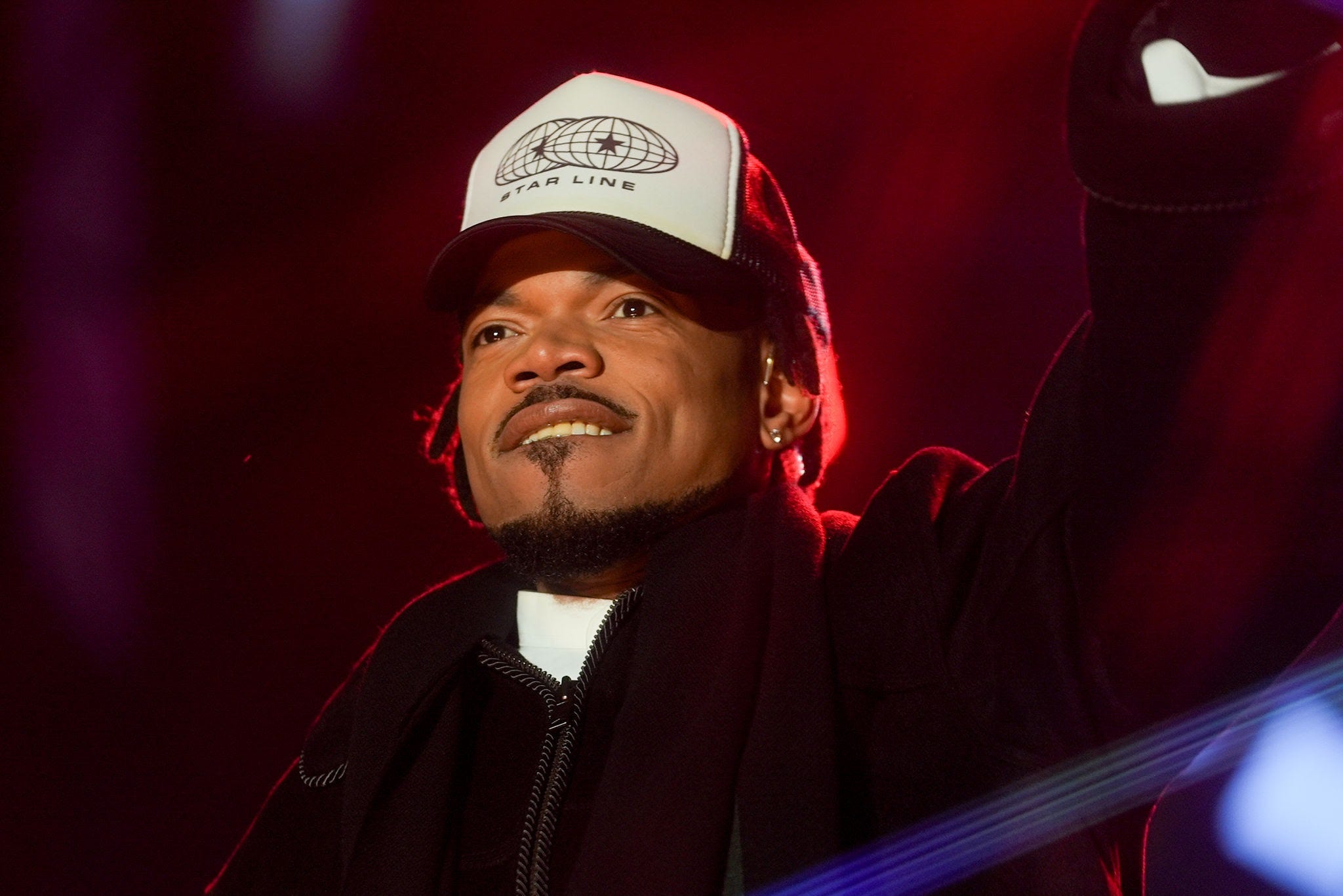
On STAR LINE, Chance leaned into all of the qualities that I love about his artistry – his brash Chicagoness, his Pro-Blackness, and his poetic pen game. His confidence returned, but in a different fashion. He traded in the infamous “3” fitted cap for a bucket hat, or trucker hat, and grew his locs. For the fans who didn’t abandon Chance, they were welcomed to board the proverbial Star Line. And as we walk up the gangway to enter onto the main deck, we are greeted by none other than the captain himself: “Surprise, it’s the boy who lived,” Chance raps on the opening verse, and oh, how nice it is to hear that voice again. Yes, those words are the first to be announced on Track 1 of STAR LINE, but not before DJ Pharris echoes, “This Chicago, ni**a.” The first moments on the album feel like a calling card, a teachable moment to remind his fans he never forgot where he came from. He doesn’t run away from his past either, as he addresses the seemingly ill-fated events that haunted him six years ago, but not without standing firm in his transformation.
Surprise, Chance now has guns and wears chains, and yes, the subject matter had been present in his music before, but the tone changed. I remember watching a young Chance, fresh off the release of his Acid Rap mixtape, tell Sway Calloway he was “not lacking” when it came to possessing firearms. The reluctance in his voice and discomfort on his face told a tale of the many lives lost in Chicago during its most violent times. It would have also been negligent on his part to omit that he stayed strapped and ready, revealing to the world that Chance the Rapper was a sitting duck while in the city. “This weekend,” Chance bounced timidly next to Sway, “41 people got shot.” When this is the reality of your hometown, knowing when and where to play the tough guy is a matter of survival, and those survival instincts don’t leave. Because of Chicago’s hip-hop ecosystem, fans of the art form could easily label the Chi-Town rappers who were from the neighborhoods where the tragedies unfolded. Unlike Keith Cozart, I never placed Chancellor Bennett in those spaces, so his gun bars, which are prevalent on STAR LINE, give off a false impression. Chance is the positive rapper who is unapologetic about protecting himself, but protection in America is often fraught with disappointment. ICE killed an American citizen before ringing in 2026 and murdered another American citizen seven days later. There’s something to be said for the agencies that take an oath to protect and serve, only to be caught on phone cameras committing harmful acts against communities who ironically made this country great before the slogan. $396.84 billion allocated to DHS budgetary resources — that would rank as 41st in worldwide GDP. The feeling of safety doesn’t require a price tag; rather, it only requires taxpayers’ dollars utilized to harm taxpayers. The question bears: who are we protecting and why have we been protecting them? Why are we protecting the bad guys? With the help of community violence intervention programs, Chicago shootings significantly went down in 2025. It’s not hard to believe how even a quarter of $396.84 billion could further transform inner-city Chicago for the better, maybe, into a place where Chance doesn’t have to tote a killing machine.
Chance would tell you, STAR LINE is not a comeback album. I would believe him. Another title that can be added to Chance’s collection of skills is community organizer, and this spirit comes through in full force at the end of “Star Side Intro,” a voice recording of Richard Pryor from the WattsStax documentary, which concludes the track:
“All of us have something to say, but some are never heard. Over seven years ago, the people who watched, stood together, and demanded to be heard. For over six hours, the audience heard, felt, sang, danced, and shouted the living word, in a soulful expression of the Black experience.”
In a prophetic sense, Chance has always been an organizer, whether it was his OpenMike nights inspired by his mentor, Brother Mike Hawkins, or Ghana’s Black Star Line Festival; his lasting impression has been felt. Essayist Hanif Abdurraqib wrote this about Chance: “He has made joy into a brand,” and it’s true. With joy, there are no comebacks because everlasting joy is a constant flow of restorative juices, propelling one to share that wonderful emotion with those around them. With joy, we don’t acknowledge the F-minuses and lift the downtrodden. But more importantly, with joy we can always say – and we back.
©Cole Henderson. All Rights Reserved.
WOOOOOOOOOOOOOOO incredible. Sorry, I'm late to the party. Thanks for blessing us yet again. Love you!
Cole is back. But just like Chance, the joy never left. You just deepened your capacity for it. I can feel it all over this essay.